16 July 2012
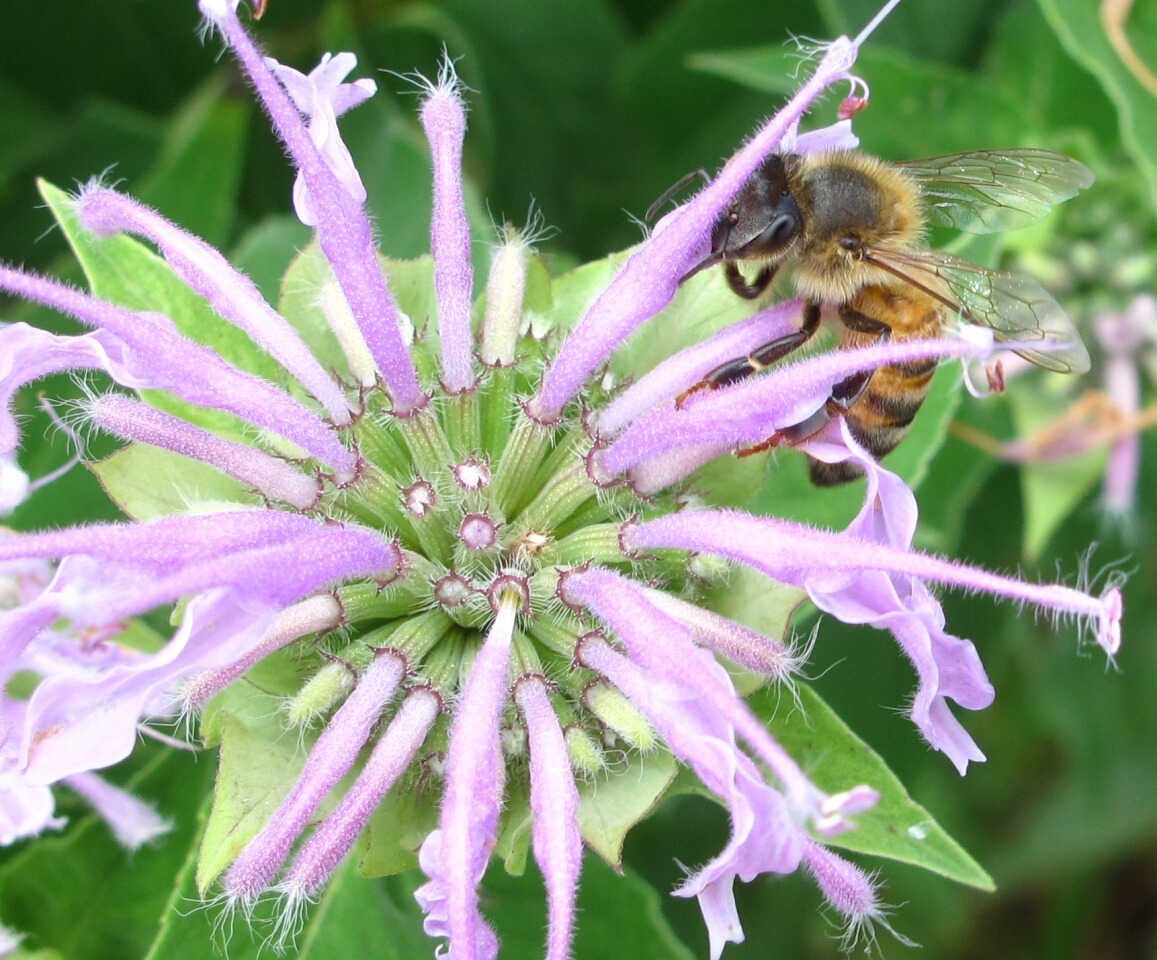
Honeybee
Along the driveway to our cabin is a large patch of Wild Bergamot (Monarda fistulosa) which is in full bloom. I make this one of my daily stops for photos because of the many butterflies and bees that are attracted to the flowers. Click on image to enlarge and see detail of bee and flower.


15 July 2012
Wildflower - Evening Primrose
I found this Evening Primrose (Oenothera biennis) blooming along the cabin driveway, just off Joyce Road. The Evening Primrose is a native North American wildflower.

The flowers partly close during the day, and fully open in the evening. With our current hot/day weather the flower wasn't easy to locate and photograph.

Since the flower is a night bloomer, this plant attracts a variety of moths but other insects will take advantage of an open flower.


The flowers partly close during the day, and fully open in the evening. With our current hot/day weather the flower wasn't easy to locate and photograph.

Since the flower is a night bloomer, this plant attracts a variety of moths but other insects will take advantage of an open flower.

14 July 2012
Wildflower - Teasel
While it may look like a member of the thistle family, the Common Teasel (Dipsacus fullonum) is not a thistle. This member of the teasel family (Dipsacaceae) is native to Eurasia and North Africa.

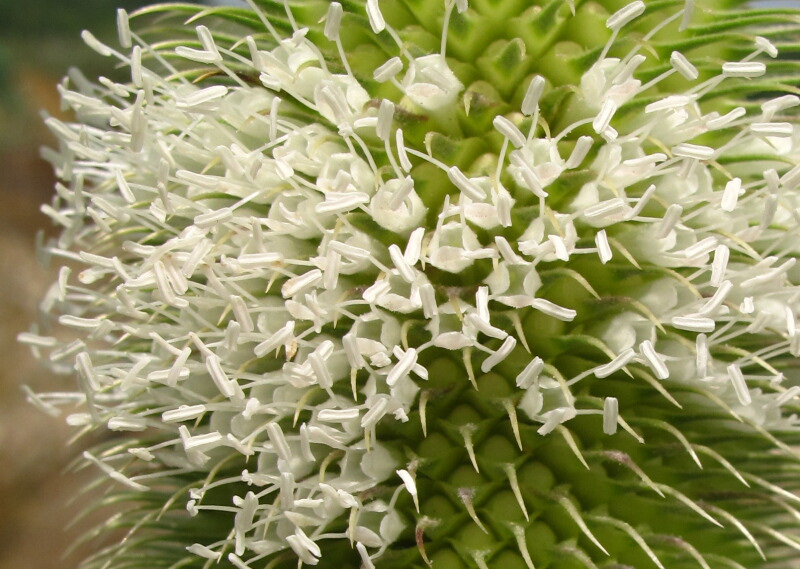
The flowers bloom on the egg shaped head in rows starting near the middle. The head is covered with hundreds of individual flowers that burst forth from between the bristles of the head. The color of the flowers can vary from pink to blue but the teasel on our cabin property has white flowers.

On the neighbor's property, the teasels are a blueish-pink.

This plant can grow in poor/dry soil and reach 9 foot tall. Our teasels are growing next to a rock pile by Joyce Road and are at least 8 feet tall.

Even a year after blooming the plant stalk and flower heads are still around.


The flowers bloom on the egg shaped head in rows starting near the middle. The head is covered with hundreds of individual flowers that burst forth from between the bristles of the head. The color of the flowers can vary from pink to blue but the teasel on our cabin property has white flowers.
On the neighbor's property, the teasels are a blueish-pink.

This plant can grow in poor/dry soil and reach 9 foot tall. Our teasels are growing next to a rock pile by Joyce Road and are at least 8 feet tall.

Even a year after blooming the plant stalk and flower heads are still around.

13 July 2012
Summer Deer
I've been doing a lot of work with my tractors at our cabin and the deer pay little attention to me while I'm working. This doe and twin fawns came out to visit the food plot while I was working 30 yards away.

Earlier in the day, a doe was grazing at the food plot when I arrived to work at the pond. When the doe finished grazing it walk withing 15 yards of me to bed down in the tall grass below the dam. During the day I had kicked a buck and doe out of this same spot.


Earlier in the day, a doe was grazing at the food plot when I arrived to work at the pond. When the doe finished grazing it walk withing 15 yards of me to bed down in the tall grass below the dam. During the day I had kicked a buck and doe out of this same spot.

12 July 2012
Wildflower - Bull Thistle
The Bull Thistle (Cirsium vulgare) is another plant that farmers and landowners have very little love for. This member of the Aster family (Asteraceae) is native to Europe and has become an invasive weed in North America.

As with many of the non-native invasive weeds, insects such as this Eastern Tiger Swallowtail (Papilio glaucus) are attracted to the Bull Thistle.

A bee covered with pollen on the Bull Thistle flower.

A close-up view of the Bull Thistle flower.


As with many of the non-native invasive weeds, insects such as this Eastern Tiger Swallowtail (Papilio glaucus) are attracted to the Bull Thistle.

A bee covered with pollen on the Bull Thistle flower.

A close-up view of the Bull Thistle flower.

11 July 2012
Wildflower - Goldenrod
The Goldenrod (Solidago canadensis) is starting to bloom. This plant is a member of the Aster family (Asteraceae) and considered a weed by most farmers but it's a source of nectar for honeybees, butterfies and other insects.

The flower heads are made up of many small flowers.

Many goldenrod stalks will have a large bump, known as a gall, which is caused by the Goldenrod Gall Fly. The Gall Fly will lay its eggs in the stalk and the insect larva receives protection from most predators by living within the gall and it uses the inside of the gall for food.


The flower heads are made up of many small flowers.

Many goldenrod stalks will have a large bump, known as a gall, which is caused by the Goldenrod Gall Fly. The Gall Fly will lay its eggs in the stalk and the insect larva receives protection from most predators by living within the gall and it uses the inside of the gall for food.

10 July 2012
Skunks
I haven't seen my "White-backed" skunks at our cabin for the past couple of evenings but I did find this skunk looking for food below our barn this afternoon.

This is the first time I've seen this skunk but I decided to see how close I could get to this little guy. Within a few minutes the skunk was eating out of my hand.


This is the first time I've seen this skunk but I decided to see how close I could get to this little guy. Within a few minutes the skunk was eating out of my hand.

09 July 2012
Wildflower - Wild Bergamot
The Wild Bergamot (Monarda fistulosa) is starting to bloom and the butterflies and bees are drawn to it.

Wild Bergamot is an aromatic member of the Mint family (Lamiaceae) and native to North America.

The color of the flowers can vary from lavender, pink or white. I found this one pink plant behind our barn, within a field of lavender flowers.


Wild Bergamot is an aromatic member of the Mint family (Lamiaceae) and native to North America.

The color of the flowers can vary from lavender, pink or white. I found this one pink plant behind our barn, within a field of lavender flowers.

Wildflower - Common Mullein
Several Common Mullein (Verbascum thapsus) plants are growing along the driveway to our cabin. This species of mullein is native to Europe and can grow to 8 feet tall.

All parts of the plant are covered with a soft hair like covering. The large soft leaves of the plant have lead to the nickname "Cowboy Toilet Paper"


All parts of the plant are covered with a soft hair like covering. The large soft leaves of the plant have lead to the nickname "Cowboy Toilet Paper"


07 July 2012
Pipeline Construction
After several days of equipment problems the seeding crew was able to apply the hay mulch to the pipeline right-of-way.

Large round bales of hay are chopped/shredded for the mulch. It doesn't take long for the machine to use a bale of hay.

The bales of hay are loaded after the outer rapper is removed.

With the current dry conditions, this is a very dusty/dirty job.


Large round bales of hay are chopped/shredded for the mulch. It doesn't take long for the machine to use a bale of hay.

The bales of hay are loaded after the outer rapper is removed.

With the current dry conditions, this is a very dusty/dirty job.


06 July 2012
Wildflower - Musk Mallow
While working near our pond, I spotted some Musk Mallow (Malva moschata) starting to bloom near the wetland area. The plant is native to Europe and southwestern Asia.

Leaves and flowers of musk mallow are common additions to "wild" salads. The seeds are also edible.


Leaves and flowers of musk mallow are common additions to "wild" salads. The seeds are also edible.

05 July 2012
Wildflower - Common Milkweed
The Common Milkweed (Asclepias syriaca) is starting to bloom. Common Milkweed is also know as Butterfly flower, Silkweed, Silky Swallow-wort and Virginia Silkweed but it is most noted as the plant preferred by Monarch Butterflies.

The Common Milkweed plant may not look like it's related to the Orange Milkweed but the flower structure is very similar.


The Common Milkweed plant may not look like it's related to the Orange Milkweed but the flower structure is very similar.

04 July 2012
Wildflower - Orange Milkweed
It was easy to spot this Orange Milkweed (Asclepias tuberosa) blooming along the road at our cabin. This native plant is a member of the Milkweed family (Asclepiadaceae) and is also know by the name Butterfly Weed because of the butterflies that are attracted to the plant by its color and its production of nectar.

Close-up view of the flowers.


Close-up view of the flowers.

02 July 2012
Skunks
For the past four evenings I have seen the same skunk near our cabin but today I saw at least four more skunks in the lawn. I wasn't able to get close enough to the other skunks for photos but this one, with the all white back, is a little more friendly.

Skunks may look like a member of the cat family but they have been classified as a subfamily within the Mustelidae, or "weasel family", which includes ferrets, weasels, otters, badgers, stoats, and wolverines.


Skunks may look like a member of the cat family but they have been classified as a subfamily within the Mustelidae, or "weasel family", which includes ferrets, weasels, otters, badgers, stoats, and wolverines.

01 July 2012
"Tiny" the Calf
While at Jason and Mary Abell's, checking on the progress of hay making, we were informed of a newborn calf. Jason and I did a quick look for the calf but came up empty. Later the small calf was found in some multifloral rose bushes.

I was able to catch the very small calf, which has been named "Tiny".

"Tiny" and mom.


I was able to catch the very small calf, which has been named "Tiny".

"Tiny" and mom.

Subscribe to:
Posts (Atom)

